Ask ten people what a “good salary” in Dubai looks like and you’ll get ten different answers. Someone in finance will quote a number that makes a teacher wince. A hotel manager and a site engineer might earn roughly the same, while the surgeon down the road takes home more than both combined. That’s the thing about Dubai pay — the city average barely tells you anything useful. What actually matters is your profession.
So let’s skip the vague stuff. This is a practical look at the average Dubai salary by profession in 2026, with real monthly ranges, a bit of honest context, and the one detail that changes everything: there’s no income tax, so the number on your contract is the number that lands in your account.
What’s the Average Salary in Dubai?
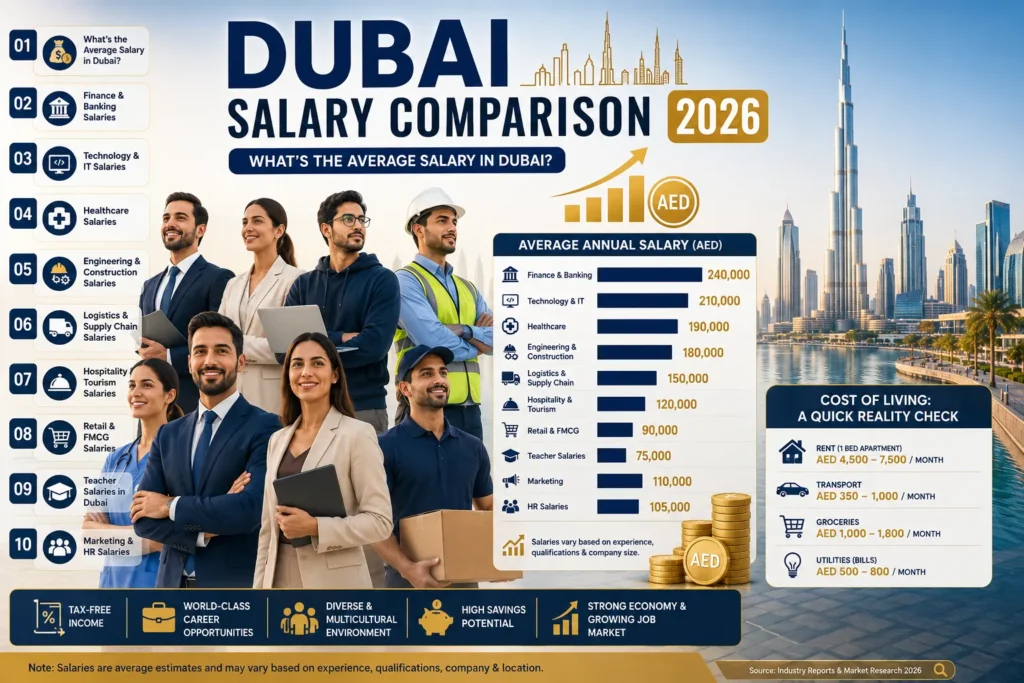
Across all sectors, the median salary in Dubai sits somewhere around AED 12,000 to AED 15,000 a month, depending on which survey you trust. Recruitment firms like Michael Page and Hays tend to put the professional average a little higher, closer to AED 15,800–18,000, because they’re mostly counting white-collar roles and skipping the lower end.
Two quick things worth knowing before we get into specifics.
There’s no legal minimum wage in the UAE. None. Salaries are set by the market and your contract, which is great if you have leverage and less great if you don’t.
And there’s no personal income tax. A software engineer on AED 22,000 keeps all AED 22,000. The same person in San Francisco on roughly equivalent gross pay might lose a third of it before rent. That gap is the whole reason Dubai salary numbers turn heads internationally gross is net here.
Many of these high-paying careers are covered in our guide to Top In-Demand Jobs in Dubai Right Now (2026).
Right. Let’s break it down by job.
Finance and Banking Salaries
This is the sector that pulls the city average up. Entry-level analysts usually start around AED 8,000–12,000 a month. Mid-level finance managers land between AED 20,000 and AED 35,000. Once you hit VP or director level, you’re looking at AED 45,000–75,000, and that’s before bonuses.
One quirk worth flagging: if your role sits inside the Dubai International Financial Centre (DIFC), expect a premium of roughly 15–20% over the same job on the mainland. Same title, same experience, different postcode, noticeably bigger paycheck. It’s a little absurd, honestly, but it’s consistent.
Technology and IT Salaries
Tech is where salaries are climbing fastest somewhere in the region of 10–15% a year for AI, cloud, and cybersecurity roles. Junior developers earn around AED 7,000–12,000. Senior engineers and DevOps specialists reach AED 18,000–30,000. Engineering managers and CTOs at well-funded scale-ups can negotiate AED 35,000–60,000.
Here’s a real-feeling example: a mid-level data engineer at a DIFC-based asset manager can realistically pull AED 28,000 base, plus a housing allowance and a 15–20% annual bonus. Total package lands near AED 420,000 a year. Not bad for someone with five or six years behind them.
My take? If you’re early in a tech career and weighing cities, Dubai’s trajectory right now is one of the better bets going.
Healthcare Salaries
Healthcare pay swings wildly depending on where you sit on the ladder. Staff nurses earn roughly AED 6,000–10,000 a month solid, especially with accommodation often bundled in, but not glamorous. Specialist physicians jump to AED 25,000–45,000. And consultants or surgeons in high-demand fields? AED 80,000 to over AED 100,000 a month is genuinely on the table.
General practitioners tend to average around AED 35,000–45,000, with experienced ones in busy family clinics doing better. The licensing process through the Dubai Health Authority adds a few weeks to hiring, which keeps qualified supply tight — and tight supply quietly props up salaries at the specialist end.
Engineering and Construction Salaries
With the UAE’s building pipeline still running hot, engineers are in steady demand. A site engineer earns about AED 7,000–12,000 a month. Project managers move up to AED 18,000–30,000. Construction directors reach AED 35,000–60,000.
It’s not the flashiest sector pay-wise, but it’s stable, and “stable” in a fast-moving city counts for more than people admit.
Logistics and Supply Chain Salaries
Dubai lives and breathes trade, so this field is reliably busy. Operations coordinators start around AED 6,000–10,000. Supply chain managers earn AED 18,000–28,000.
A nice wrinkle: roles based near Al Maktoum International Airport in Dubai South tend to run 8–12% above the city average for the sector. A logistics operations manager handling e-commerce fulfillment out there was on AED 22,000 a month in 2025 — above median, mostly because that location makes the job measurably easier to do well.
Hospitality and Tourism Salaries
This is a high-volume, lower-base sector at entry level. Front-of-house staff earn AED 3,500–6,000 a month, frequently with accommodation thrown in, which softens the modest base quite a bit. F&B managers sit at AED 12,000–18,000. Hotel general managers reach AED 35,000–55,000.
Worth saying plainly: the entry-level numbers here only make sense once you factor in housing and meals being covered. On the headline figure alone, they look thin.
Real Estate Salaries
Real estate is its own animal because base pay barely tells the story — commission does. A junior broker might start on just AED 4,000–6,000 base, but a good month can multiply that three to five times. Senior brokers sit on AED 10,000–15,000 base plus commission, and property fund managers earn AED 30,000–50,000.
If you’re risk-averse, this isn’t your field. If you can sell and you don’t mind income that swings, the ceiling is high. RERA licensing is mandatory, and it directly affects what you’re allowed to earn at every level, so don’t skip it.
Retail and FMCG Salaries
At the front line, sales associates earn AED 3,500–5,500 a month. Climb into management and the numbers change shape fast: category managers earn AED 15,000–22,000, and a country general manager for a brand can reach AED 35,000–55,000.
Teacher Salaries in Dubai
Teacher pay in Dubai is genuinely confusing if you only look at one source, because job-listing averages can read shockingly low (some sites show figures under AED 4,000, which reflects part-time and assistant roles dragging the number down). The fuller picture: realistic teaching packages at decent private and international schools land in the AED 10,000–22,000+ range once benefits are counted. Entry-level roles often start around AED 6,000–10,000.
And benefits matter enormously here. Housing, flights home, medical cover, and end-of-service gratuity can add serious value on top of the base. A teacher’s package is almost always worth more than their salary line suggests.
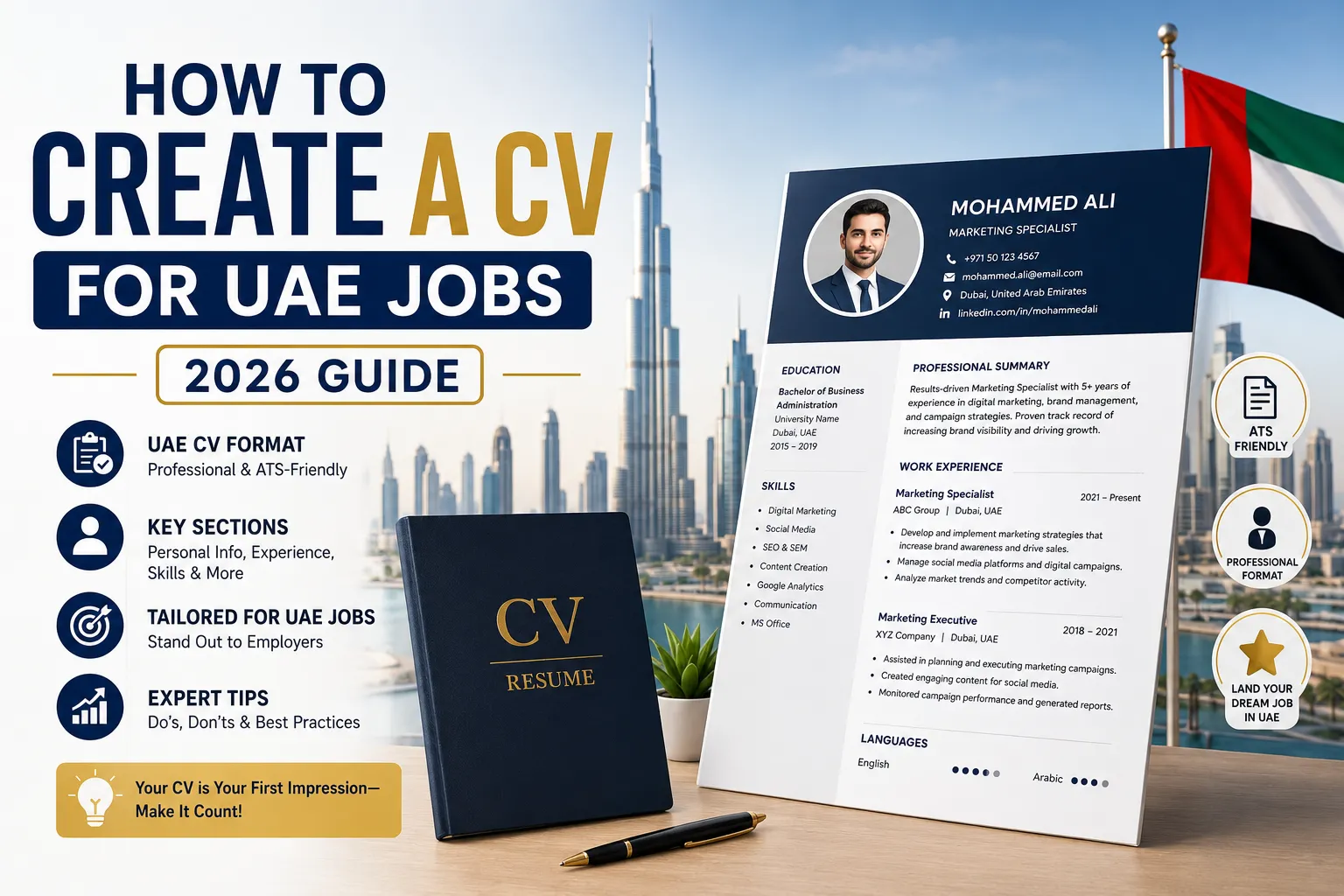
If you’re planning to apply for these positions, make sure your resume follows the format explained in How to Create a CV for UAE Jobs (2026 Guide).
Marketing and HR Salaries
These vary a lot by company size and seniority, so treat the headline averages with a pinch of salt. Mid-level marketing managers at established firms typically sit in the AED 15,000–25,000 band, with the senior end going higher at multinationals. HR managers commonly land around AED 18,000–25,000 a month, while HR directors average roughly AED 258,000 a year and can push well past AED 700,000 at the very top.
The pattern across both: the listing-site averages skew low, but real corporate packages with allowances tell a healthier story.
Cost of Living: A Quick Reality Check
Big salaries are only half the equation. A one-bedroom apartment in a central area runs AED 7,000–10,000 a month. School fees can hit AED 30,000–80,000 per child, per year. Health insurance is mandatory.
So when a recruiter waves a tax-free number at you, the smart move is to negotiate the allowances housing, schooling, flights — before you sign. Two offers with the same base can leave you with wildly different money at the end of the month once those extras are sorted (or not). That’s the part nobody tells you until you’re already here.
Frequently Asked Questions
What is the average salary in Dubai in 2026?
Across all sectors, the median is roughly AED 12,000–15,000 a month, though professional roles often average higher — closer to AED 15,800–18,000. Your profession and experience matter far more than the citywide figure.
Which profession pays the most in Dubai?
Senior healthcare specialists (surgeons and consultants) and top finance and C-suite roles lead the pack, with monthly pay running from AED 55,000 well into six figures. Tech leadership and specialist medicine are the strongest climbers right now.
Is Dubai salary really tax-free?
Yes. There’s no personal income tax in the UAE, so your gross salary equals your take-home. Corporate tax exists for businesses, but it doesn’t touch individual payslips. (Emirati nationals contribute a small percentage to a pension scheme; expats don’t.)
Is there a minimum wage in Dubai?
No. The UAE has no legally mandated minimum wage that applies across the board. Pay is set by the market and your individual contract.
Does the salary include benefits like housing?
Sometimes — and it makes a huge difference. Many packages bundle in housing, health insurance, annual flights, and end-of-service gratuity. Always compare total packages, not just the base number, when weighing offers.
Why do salary websites show such different numbers for the same job?
Because they measure different things. Job-listing averages often include part-time and junior postings that drag the figure down, while recruitment surveys focus on full professional packages. For an honest read, look at a few sources and lean toward the package figures.
Final Thoughts
If there’s one thing to take away, it’s that “the average Dubai salary” is almost a useless number on its own. A surgeon, a hotel manager, and a graduate analyst all live in the same city and earn wildly different money — your profession is the real headline, not the postcode.
So benchmark your own field, pay attention to the benefits hiding behind the base figure, and remember the whole package is tax-free. That last part quietly makes a lot of “average” Dubai salaries punch well above their weight compared to what the same number would be worth back home.
After reviewing salary expectations, the next step is learning How to Find a Job in Dubai as a Foreigner