So you’ve got a job offer in Dubai or maybe you’re still exploring the idea and now you’re staring at a maze of paperwork, acronyms, and conflicting advice on the internet. Don’t worry. The Dubai work visa process isn’t as complicated as it looks once you understand how the pieces fit together.
First, Understand Who’s Actually Responsible
Here’s something many people don’t realize: in the UAE, your employer sponsors your work visa — not you. This is a crucial starting point. Whether you’re heading to Dubai for a corporate role, a hospitality job, or a freelance setup under a free zone, the visa process is driven by your sponsoring entity.
This employer-led model is called the kafala system, though the UAE has been gradually reforming it in recent years to give workers more flexibility. Still, practically speaking, your company handles most of the heavy lifting.
Dubai Work Visa Types
Not all work visas are created equal. Here’s a quick rundown of what’s available:
Standard Employment Visa
This is the most common one. If you’re joining a company based in mainland Dubai or the wider UAE, this is what you’ll get. It’s tied to your employer and linked to a residence permit.
Free Zone Employment Visa
Dubai has dozens of free zones DIFC, JAFZA, Dubai Internet City, and more. If your company operates within one, your visa is issued through that free zone authority rather than the mainland. The process is similar but runs through a different channel.
Mission Visa / Temporary Work Permit
Heading to Dubai for a project that lasts a few months? There’s a short-term option for that. It’s less common and specific to project-based work arrangements.
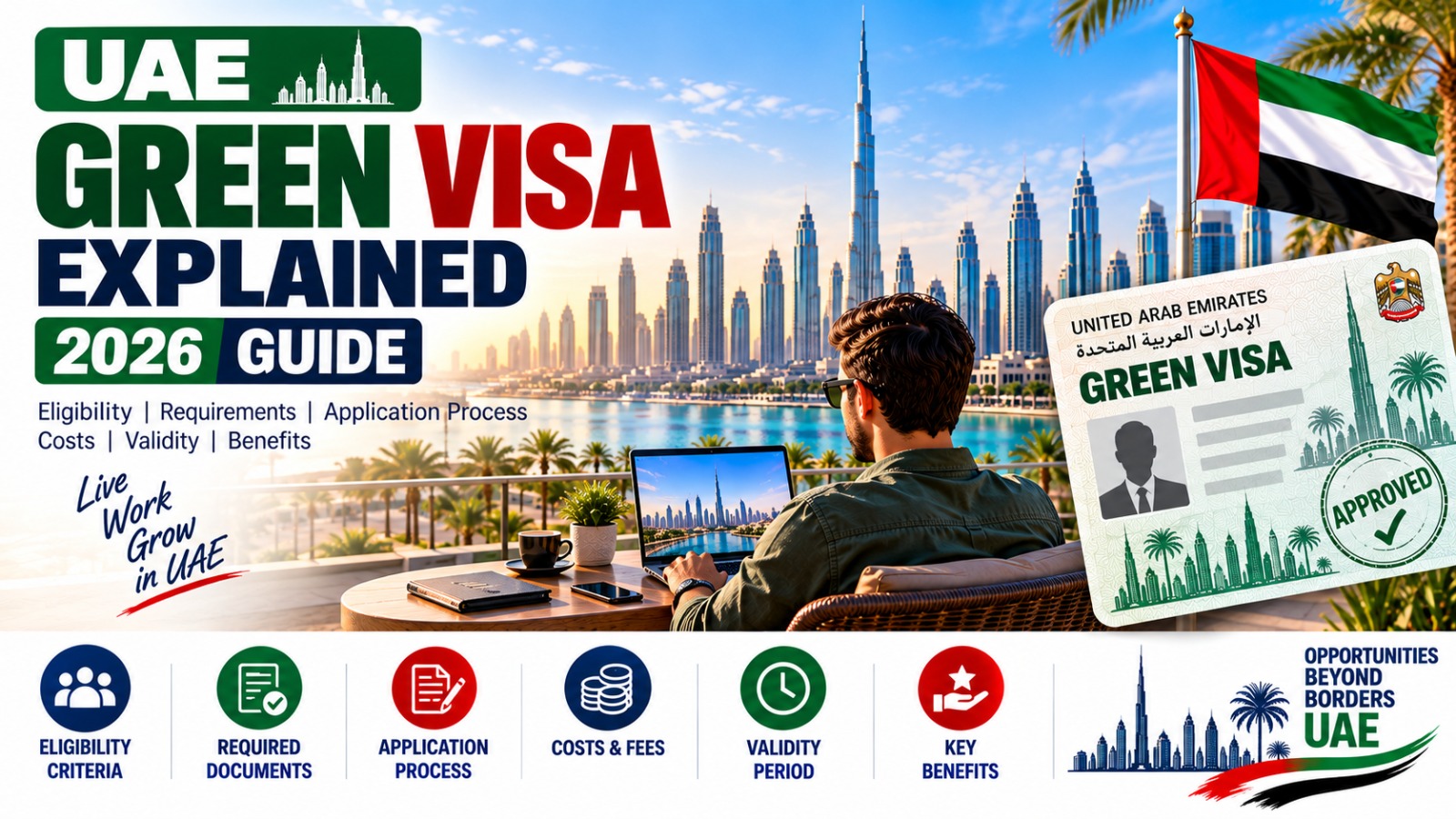
UAE Green Visa
Introduced relatively recently, the Green Visa is a self-sponsored residency option for skilled professionals and freelancers. It doesn’t require a traditional employer sponsor a big deal for independent workers.
Golden Visa (Long-Term)
For senior executives, investors, and highly specialized talent, the Golden Visa offers 5 or 10-year residency. Not a typical “work visa” per se, but relevant if you’re at that level.
Step-by-Step Dubai Work Visa Process
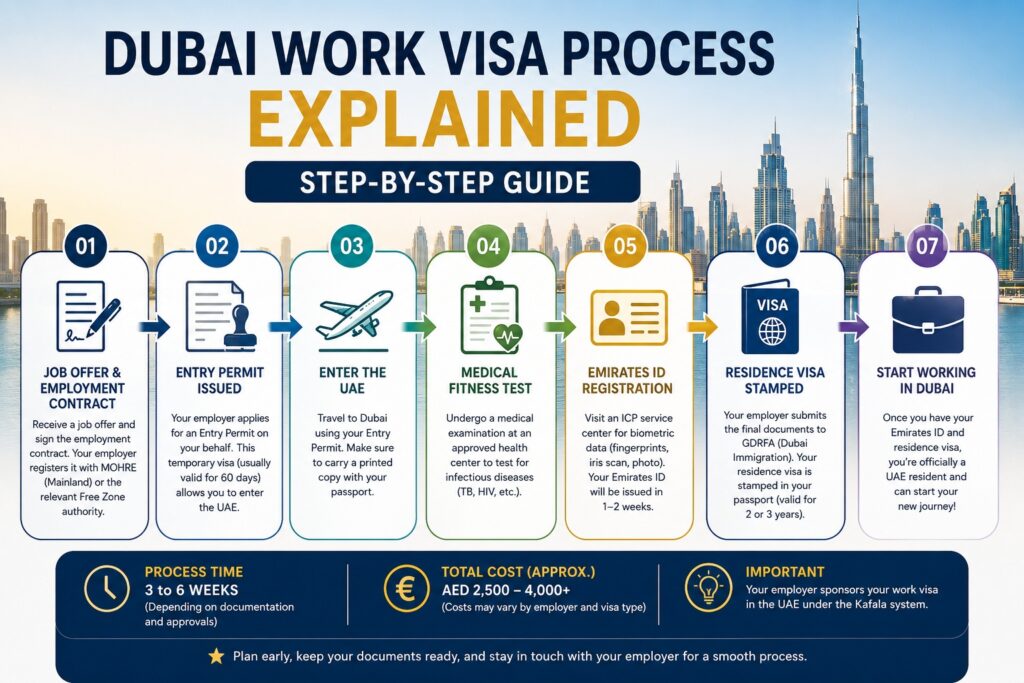
Step 1: Receive a Job Offer and Employment Contract
This is ground zero. Before anything moves, you need a formal job offer and a signed employment contract. Your employer registers this with the Ministry of Human Resources and Emiratisation (MOHRE) for mainland companies, or with the relevant free zone authority.
Step 2: Entry Permit Issued
Once your employer gets approval, they apply for an Entry Permit on your behalf. This is a temporary visa — usually valid for 60 days — that allows you to enter the UAE legally.
If you’re already inside the UAE (on a tourist visa, for example), your employer can apply for a status change instead of going through the entry permit route.
Step 3: Enter the UAE
Simple enough. You fly in on your entry permit. Keep a copy of it with your passport — you’ll need it for everything that comes next.
Step 4: Medical Fitness Test
Once you’re in Dubai, you’ll visit an approved medical center (AMER Centers or similar licensed clinics) for a health screening. They test for infectious diseases including tuberculosis and HIV. This is mandatory for everyone applying for a UAE residence visa.
Results usually come back within a few days. If you pass and the vast majority of people do — you move to the next step.
Step 5: Emirates ID Registration
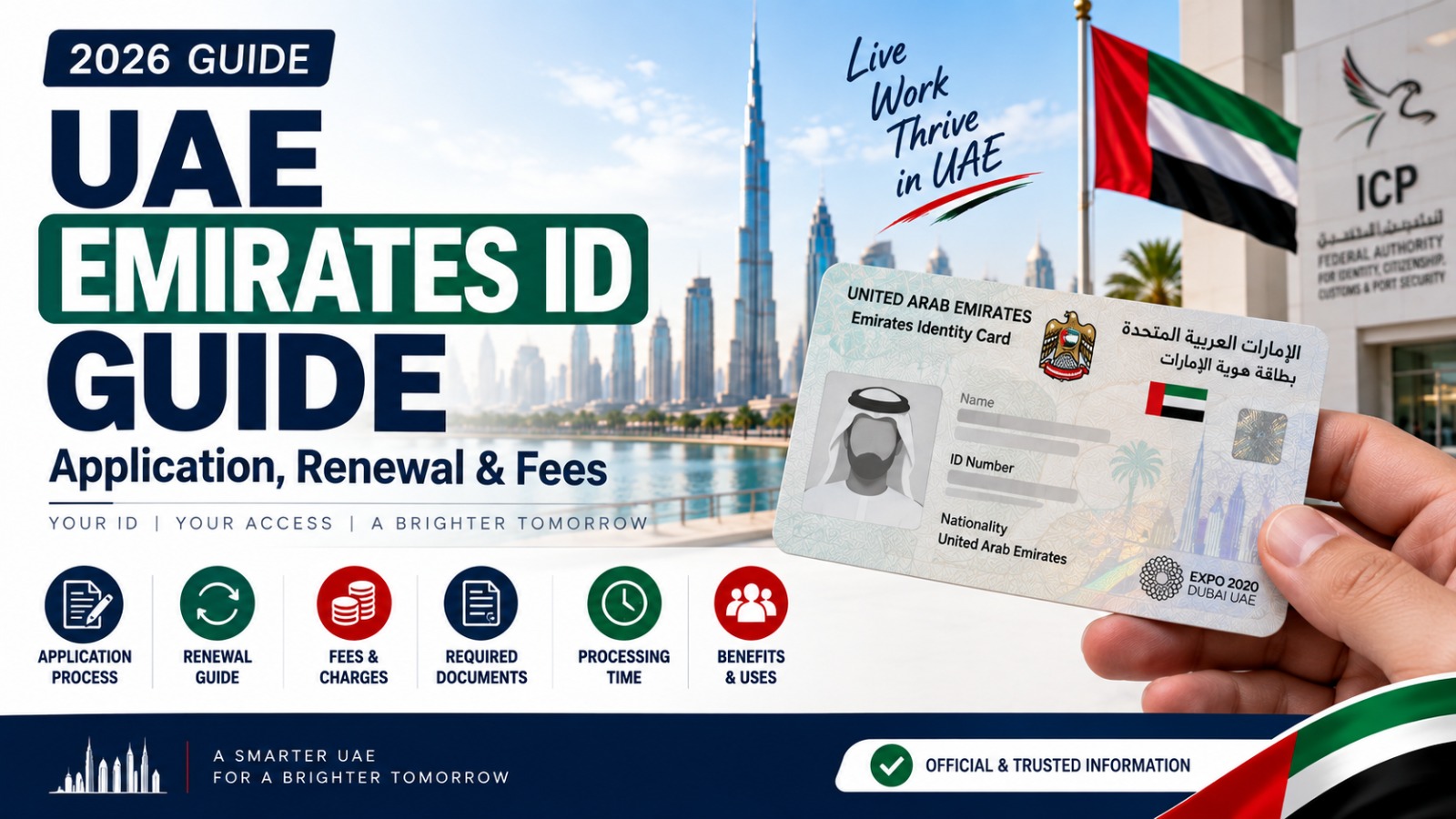
You’ll head to a Federal Authority for Identity, Citizenship, Customs and Ports Security (ICP) service center to register for your Emirates ID. This biometric card becomes your primary ID in the UAE — for everything from opening a bank account to accessing government services.
You’ll give biometrics (fingerprints, iris scan, photo) here. The card itself takes 1–2 weeks to arrive.
Step 6: Residence Visa Stamped in Passport
This is the moment the process really “completes.” Your employer submits final documents to the immigration authority (GDRFA in Dubai), and your residence visa gets stamped into your passport. It’s typically valid for 2 or 3 years, after which it must be renewed.
Once you have the visa stamp and Emirates ID in hand, you’re officially a UAE resident.
Dubai Work Visa Documents Required
Requirements vary slightly by employer and visa type, but generally expect to provide:
- Valid passport (minimum 6 months validity)
- Recent passport-sized photographs (white background)
- Signed employment contract
- Educational certificates often requiring attestation (more on this below)
- Medical fitness test result
- Entry permit copy
A word on attestation: UAE authorities require foreign documents especially degrees and professional certificates to be attested through a specific chain: notarized in your home country, authenticated by the foreign ministry there, then attested by the UAE Embassy in your country, and finally verified by the UAE Ministry of Foreign Affairs. It sounds tedious because it is. Start this process early.
Dubai Working Visa Processing Time
Realistically, from the time your employer initiates things to when you have your Emirates ID and residence visa, expect 3 to 6 weeks. If there are document delays or attestation issues, it can stretch to 2 months.
Free zone processes are sometimes faster. Mainland processes through MOHRE can have more back-and-forth.
Read Also: UAE Medical Test for Visa
Dubai Working Visa Cost
Here’s a rough picture of what to expect financially:
| Fee Item | Approx. Cost |
|---|---|
| Entry Permit | AED 500 – 1,000 |
| Medical Fitness Test | AED 250 – 400 |
| Emirates ID | AED 100 – 370 (depending on validity) |
| Residence Visa Stamping | AED 1,000 – 1,500 |
Most UAE employers cover these costs it’s standard practice and, in many cases, legally required for employer-sponsored visas. But confirm this in writing before you start.
Read Also: UAE Visa Rejection Reasons
What About Family Visas?
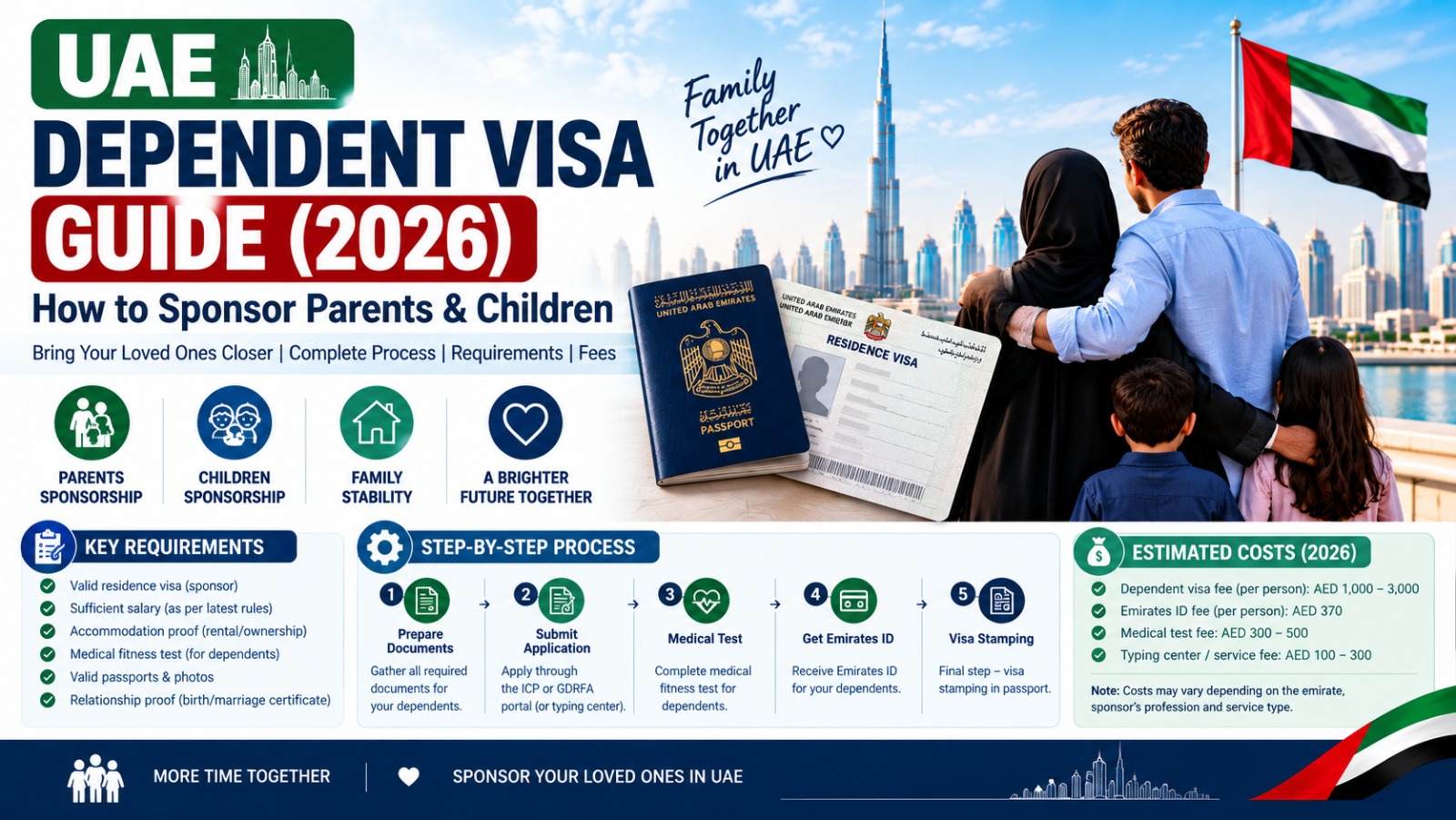
Once you have your own residence visa, you can sponsor immediate family members — spouse and children — to live with you. There are minimum salary thresholds (typically AED 3,000–4,000/month for a basic family visa, higher for certain categories), and the process involves similar steps: entry permits, medical tests, Emirates IDs.
Parents can sometimes be sponsored too, though this is more complex and increasingly restrictive.
Read Also: UAE Overstay Fines
The UAE Green Visa: Is It Right for You?
The Green Visa deserves its own mention because it’s changed the game for a lot of freelancers and independent professionals. Launched under the broader UAE visa reform push, it allows skilled workers to reside in the UAE for up to 5 years without needing an employer sponsor.
To qualify, you generally need to prove income above a certain threshold, hold a valid freelance permit or work in a qualifying profession, and have no criminal record. It’s not for everyone, but if you’re a consultant, digital nomad, or someone who works with multiple clients, it’s worth looking into seriously.
Read Also: UAE Freelance Visa
Renewing Your Dubai Work Visa
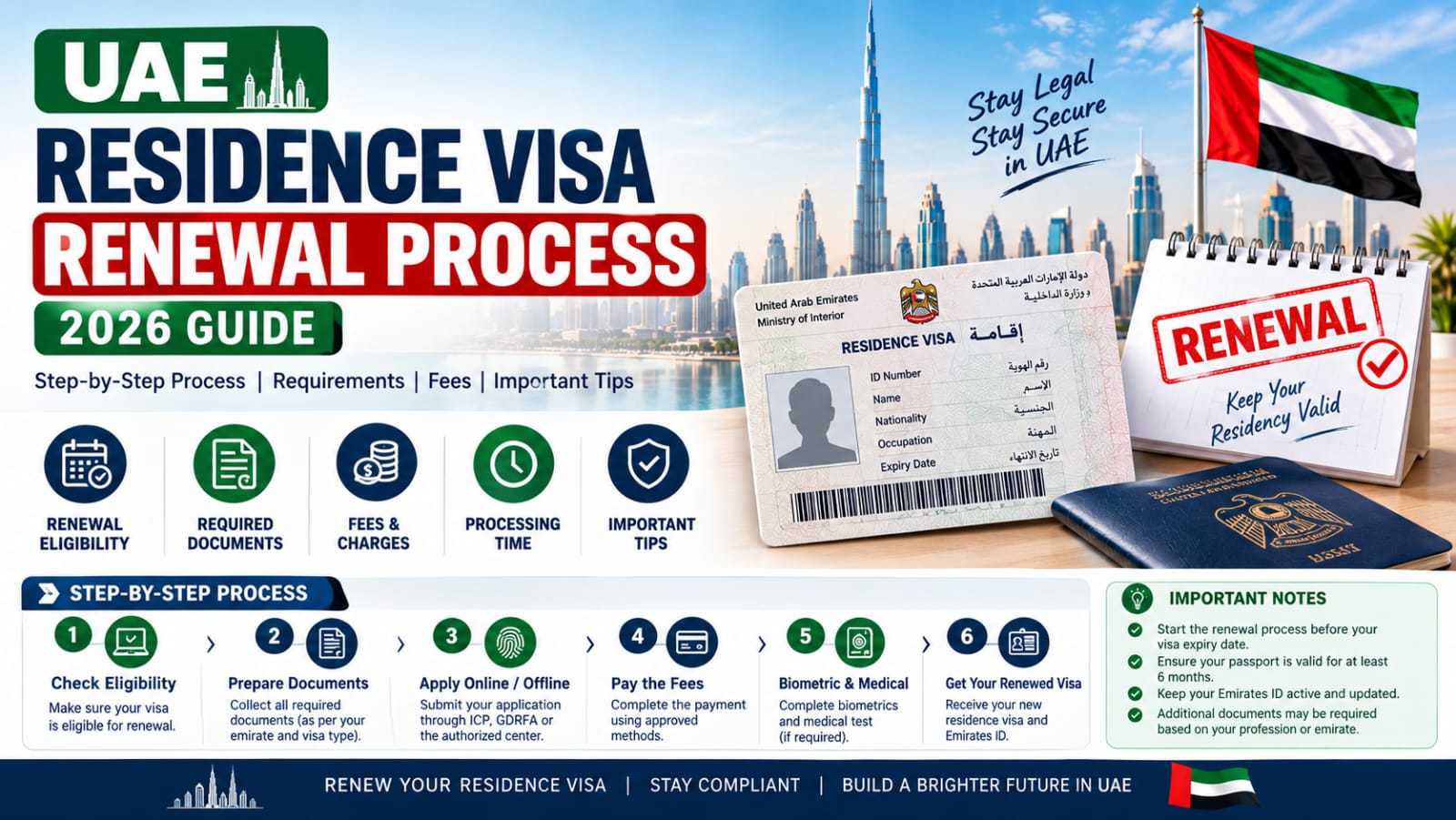
UAE work visas typically last 2 or 3 years. Renewal is initiated by your employer again, they lead the process. You’ll redo the medical test, update your Emirates ID, and get a fresh visa stamp.
One thing to note: if you leave the UAE for more than 6 months continuously while holding a residence visa, it can lapse. This catches people off guard, especially during extended home visits or remote work periods abroad.
Read Also: UAE Investor Visa
Final Thoughts
The Dubai work visa process is structured, employer-led, and once you understand the sequence fairly predictable. The biggest variables are document attestation timelines, how organized your employer’s PRO (Public Relations Officer) is, and your own responsiveness in getting paperwork together.
If you’re heading to Dubai for a legitimate job with a credible company, this whole process should feel manageable. Just start the attestation process early, keep copies of everything, and don’t let that entry permit expire while you’re waiting on medical results.
Dubai has built an entire infrastructure around welcoming skilled workers from around the world. The visa system, for all its paperwork, reflects exactly that.
Once you receive your Dubai work visa and become a legal resident, you may also be eligible to sponsor your spouse and children through a Family Visa in UAE.
FAQS
The minimum age for a Dubai work visa is generally 18 years, while the maximum working age depends on UAE labor laws and employer requirements.
No, you cannot legally work in Dubai on a visit visa. You must obtain a valid work visa and work permit sponsored by your employer.
The cost of a 2-year Dubai work visa varies depending on the employer, job category, and visa type, but it is usually covered by the employer.
You can check your Dubai work visa status online using your application details through the official UAE immigration or visa services portal.