Getting a UAE visa rejected is stressful. You paid the fees. You waited for days. Then you got a status of “rejected” without any reason.
You have guests. Many people suffer UAE visa rejection every year. The good news is that most rejection reasons are easy to grasp. Once you know them, you can avoid the same mistakes next time.
This guide explains the top UAE visa rejection reasons, how to avoid them, and what to do if your visa gets refused.
Why Do UAE Visa Applications Get Rejected?
The UAE has strict immigration laws. Officers carefully review each application. They check out your papers, your background, and your travel history.
A rejection does not automatically mean something is wrong with you. Sometimes it is a tiny mistake, like a false date or a fuzzy photo. Other times it’s a bigger deal, like a visa ban or phony papers.
Once you know the exact reason why your UAE visa was denied, you can fix the issue in no time.
Top 10 UAE Visa Rejection Reasons
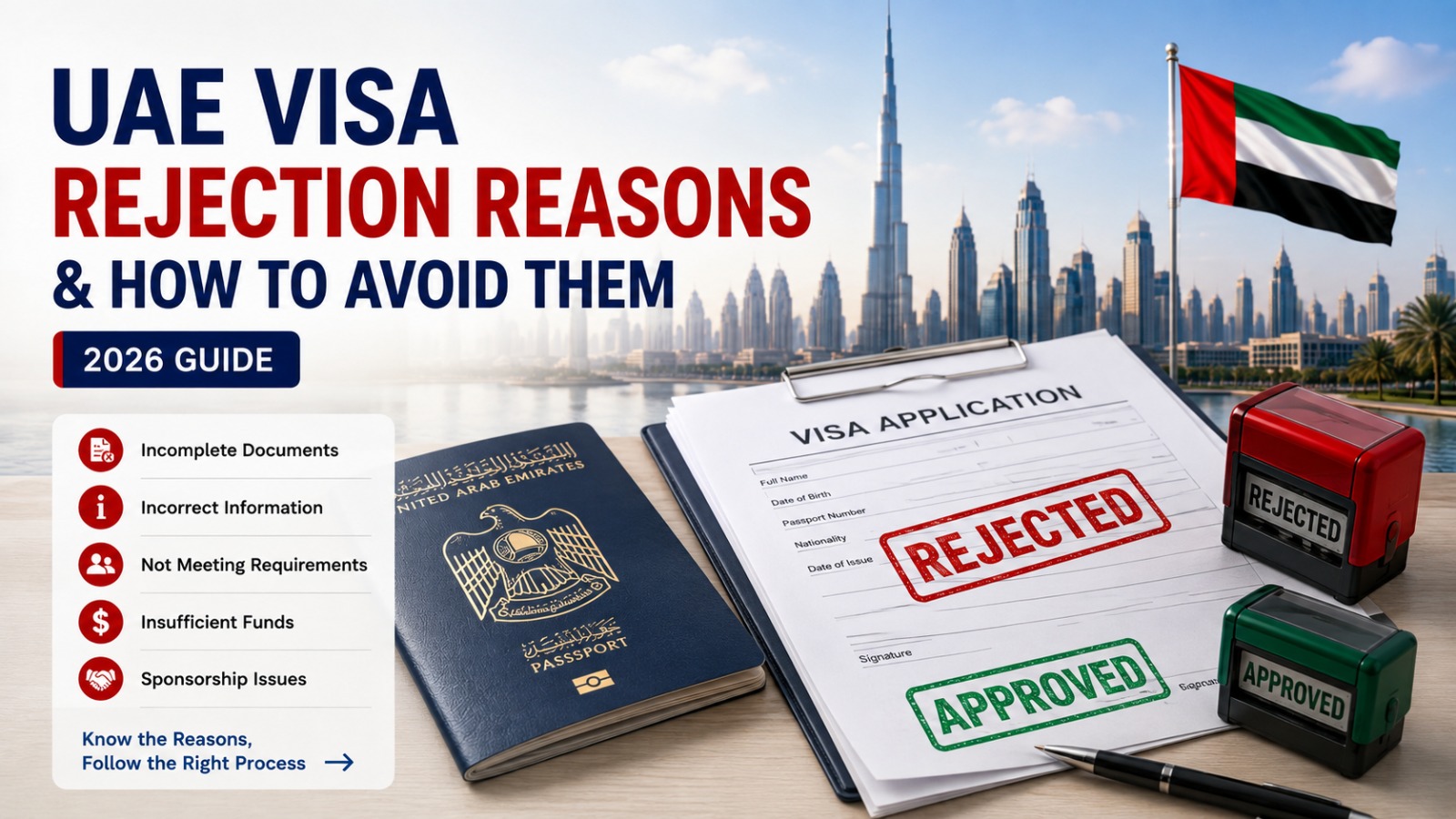
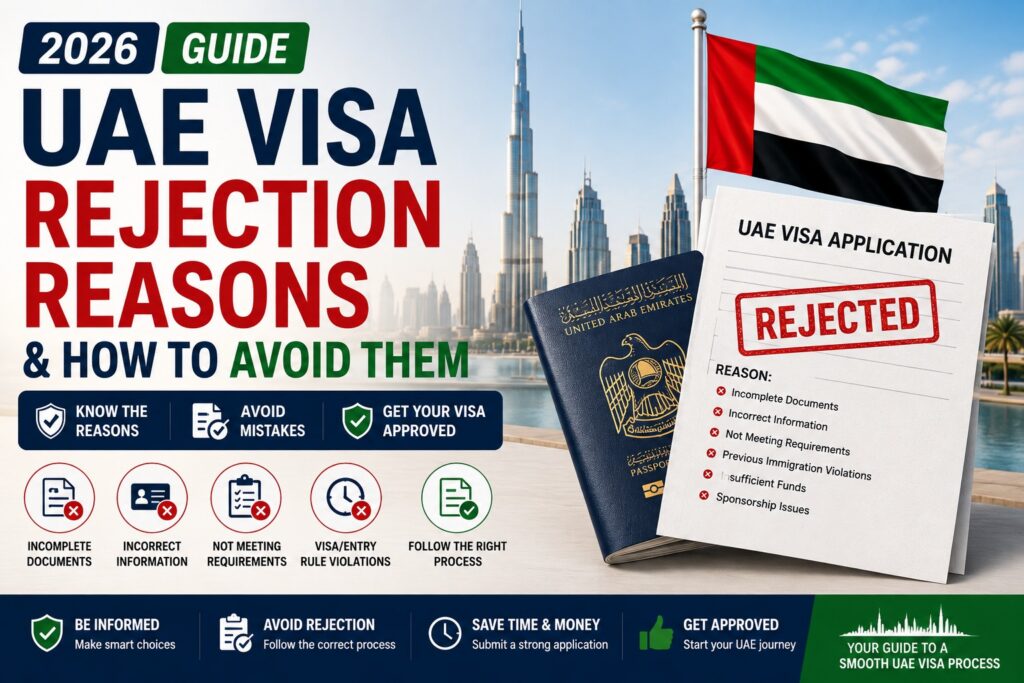
Today, some of the most common reasons for UAE visa rejections are:
1. Wrong or Insufficient Materials: Instant rejects for no pages, wrong file types or fuzzy scans. All documents must be clear, complete and exactly match your passport details.
2. Passport Problems: One of the most common reasons is a passport with less than six months’ validity. UAE visa rejection is also caused by passports that are damaged, expired or torn.
3. Having overstayed on a previous visa: If you have overstayed in the UAE before, your new application may be rejected. Records of overstayers are kept in the system for years.
4. Security or Criminal History Problems: Even a blemished criminal history can be a basis for rejection. UAE immigration checks the background of every applicant.
5. Insufficient Bank Balance UAE authorities require proof of your ability to support yourself for visit visas. Low bank balance or no bank statement is one of the top UAE visit visa rejection grounds.
6. Documents that are forged or fraudulent: Submitting a fake certificate, a fake job letter or an edited bank statement can get you rejected or even banned permanently.
7. Information mismatch: If your name, date of birth, or passport number does not match across papers, the system flags your file. Small typing errors pose big repercussions.
8. Sponsor or Employer Problems: In the case of work visas, if the sponsoring company has legal issues, unpaid penalties, or a negative record, your UAE work visa rejection is inevitable.
9. Health or Medical Problems: Work and residency permits require a medical fitness test. Failing testing for certain conditions results in automatic rejection.
10. Previous Visa Ban: You will most likely be rejected when applying for a new visa if you have been deported or banned from the UAE before, unless the ban period is over.
Read Also: UAE Residence Visa
How to Avoid UAE Visa Rejection
Getting a UAE visa refused is easier to avoid than rectified later. Here are some UAE visa approval recommendations to keep in mind before you apply.
- Proofread everything twice. Names, dates, and numbers must match your passport exactly.
- Carry a valid passport. Ensure it has at least six months left until expiry.
- Show clear bank statements. Make sure you have the proper balance and no big new deposits just before you apply.
- Be honest. “Do not submit false documentation ever. Not worth the risk.
- Verify your sponsor’s status. If applying through a company, confirm it is legally active in the UAE.
- Apply through trusted sources. Make use of only official UAE government portals or licensed visa agents.
- Review your travel history. Old overstays or bans need to be cleared first.
- Obtain medical clearance early. You must have completed all the health tests indicated before you can submit your application.
These steps greatly reduce the chances of any UAE visa problems.
Read Also: UAE Employment Visa
What to Do If Your UAE Visa Is Rejected
Don’t panic if your UAE visa gets rejected. Here is what to do:
Step 1: Identify the exact reason. Look at your rejection notification or ask your visa agent for details. Some rejections will contain a code or short reason.
2. Solve it. If it was a mistake in the document, correct it. If it was a bank balance issue, update your bank statement. Match the fix with the specific cause.
Step 3: Contact UAE immigration or your representative. If you are unsure why you were denied, contact the General Directorate of Residency and Foreigners Affairs (GDRFA) or your visa service provider for details.
Step 4: Properly reapply. Reapply once the issue is resolved. Do not repeat the same error.
Step 5: Get expert help if necessary. If you have been refused more than once, you may wish to consider using the services of an immigration consultant. They are familiar with handling intricate UAE immigration denial situations.
Read Also: UAE Medical Test for Visa
Can You Reapply After a UAE Visa Rejection?
Yes.
Most applicants can reapply after correcting the issue that caused the refusal. The rules of processing are different depending on the visa category and the cause for refusal.
For silly mistakes such as wrong paperwork, you can usually resubmit straight away. If they are serious, like being banned from entering the country or overstaying your visa, you may have to wait until the ban is over.
Before reapplying, be sure:
- The basic problem is entirely fixed.
- All documentation is up to date and correct.
- You are applying for the proper visa type for your situation.
The UAE visa refusal is usually always the same mistake when reapplying.
Read Also: How to Check UAE Visa Status Online
Final Thoughts
A UAE visa rejection notice is not the end of the world. Most visa rejection reasons for rejection can be corrected when you know what they are.
Go over your paperwork carefully. Keep your bank records sparkling clean. Be honest on all applications. Following the UAE visa acceptance tips in this guide increases your chances of success.
If your visa was declined before, address the issue, resubmit the right way, and give your application the best opportunity to succeed in 2026.
Frequently Asked Questions
Why was my UAE visa rejected?
Common reasons include document errors, passport issues, low bank balance, past overstays, or sponsor problems. Check your rejection notice for the exact cause.
How long is the ban after a UAE visa rejection? A simple rejection usually has no ban. However, overstays or deportations can lead to bans ranging from six months to ten years, depending on the case.
Can I get a refund if my UAE visa is rejected?
Visa fees are usually non-refundable. Some service charges from agents may also be non-refundable, so check the terms before applying.
How long does UAE visa reapplication take?
Reapplication processing time is similar to the first application, usually three to seven working days, depending on visa type.
What are common UAE visa application mistakes?
Mismatched names, outdated documents, blurry scans, low funds, and incomplete forms are the most common UAE visa application mistakes.
Can Pakistanis get a UAE visa rejected easily?
UAE visa rejection reasons for Pakistanis are the same as for other nationalities. Document accuracy, financial proof, and travel history matter most, not nationality alone.