If you are planning to move to Dubai — or you are already here and trying to make sense of where all your salary goes this guide is for you. After living in this city for a while, one thing becomes very clear: Dubai is not just expensive or affordable. It is both, depending entirely on the choices you make.
This is not a generic list of numbers copy-pasted from somewhere. This is a real, detailed breakdown of what a person actually spends every month in Dubai in 2026 — from rent and groceries to the small daily habits that quietly drain your bank account.
Let us go category by category.
1. Accommodation — Your Biggest Monthly Expense
Let us be honest: rent will eat the largest portion of your monthly budget. Where you live in Dubai makes a massive difference not just financially, but in terms of your daily lifestyle.
Rent is the biggest factor affecting the Cost of Living in Dubai
| Accommodation Type | Affordable Areas (AED/Month) | Mid-Range Areas (AED/Month) | Premium Areas (AED/Month) |
| Shared Room | 800 – 1,500 | 1,500 – 2,500 | 2,500 – 4,000 |
| Studio Apartment | 2,500 – 4,000 | 4,000 – 6,500 | 7,000 – 12,000 |
| 1-Bedroom Apartment | 4,000 – 6,500 | 6,500 – 10,000 | 12,000 – 20,000+ |
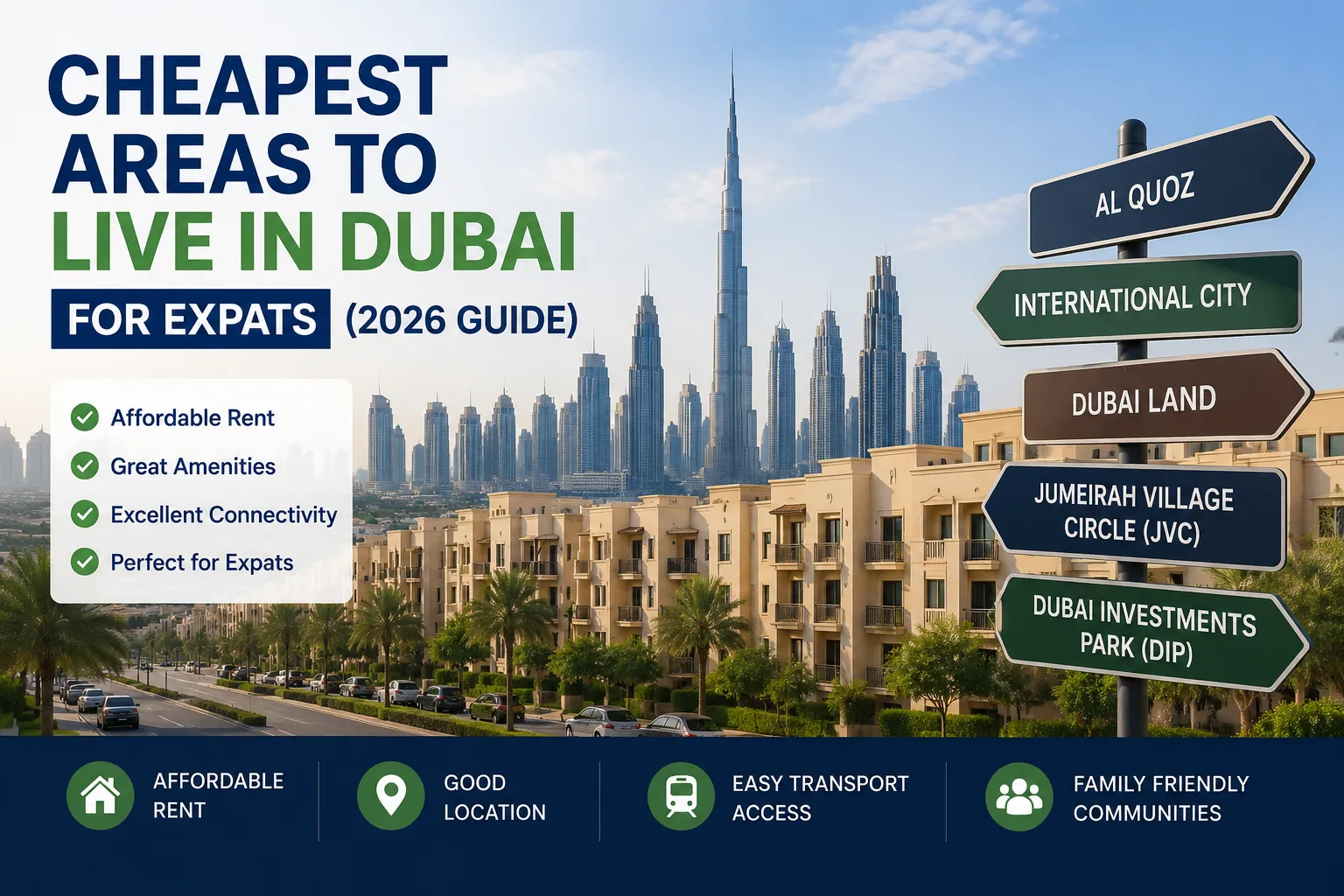
Affordable areas include International City, Al Nahda, Deira, and Discovery Gardens. Premium areas include Dubai Marina, Downtown Dubai, Business Bay, and Palm Jumeirah.
Pro tip: If you are just starting out in Dubai, shared accommodation in areas like Al Nahda or International City can save you AED 2,000–3,000 per month compared to a solo studio. That difference adds up to over AED 24,000 per year which is real money.
2. Food and Grocery Expenses
Food costs in Dubai can vary wildly. Someone who cooks at home 6 days a week and shops at Lulu Hypermarket will spend a fraction of what someone who eats out every day at restaurants in JBR spends.
H3-Monthly Grocery Budget (Cooking at Home)
| Lifestyle | Estimated Monthly Cost (AED) |
| Budget (local brands, Lulu/Carrefour) | 600 – 900 |
| Moderate (mix of local & imported) | 900 – 1,400 |
| Premium (organic, imported, specialty) | 1,800 – 3,000+ |
Eating Out — Per Meal Estimates
| Meal Type | Approx. Cost (AED) |
| Cafeteria / Indian / Pakistani meal | 15 – 30 |
| Fast food (McDonald’s, KFC, etc.) | 35 – 55 |
| Mid-range restaurant (per person) | 70 – 150 |
| Upscale restaurant (per person) | 200 – 500+ |
The reality: most working professionals in Dubai spend between AED 1,000 to AED 2,000 per month on food if they maintain a reasonable balance between cooking at home and eating out occasionally.
3. Transportation Costs
Getting around Dubai is either very affordable or surprisingly expensive — depending on whether you own a car or rely on public transport.
Public Transport (Metro, Bus, Tram)
- Nol Card monthly top-up (regular commuter): AED 250 – 400
- Metro + bus combination (5 days/week): approximately AED 300 – 350/month
- Additional taxi/Uber rides: AED 100 – 300/month
Private Car Ownership
| Expense | Estimated Monthly Cost (AED) |
| Fuel (average usage) | 300 – 600 |
| Car insurance | 200 – 500 |
| Parking fees | 100 – 400 |
| Maintenance & unexpected repairs | 150 – 400 (averaged) |
| Total Estimate | 750 – 1,900/month |
For single professionals working in areas well-connected by metro — such as Business Bay, DIFC, or Deira — public transport is genuinely sufficient and saves a lot of money.
4. Utility Bills
Utilities in Dubai are managed through DEWA (Dubai Electricity and Water Authority) and can vary significantly based on apartment size, usage, and the season.
| Utility | Low Season (Oct–Apr) AED | High Season (May–Sep) AED |
| Electricity & Water (Studio) | 200 – 350 | 450 – 700 |
| Electricity & Water (1-BR) | 300 – 500 | 600 – 1,000 |
| Internet (100–500 Mbps plans) | 200 – 350 | 200 – 350 |
| Mobile Phone Plan | 80 – 200 | 80 – 200 |
Note: Air conditioning is the biggest driver of electricity bills in Dubai. During the summer months (June to September), it is simply not possible to survive without AC running almost continuously factor this into your budget.
5. Health Insurance and Medical Costs
Health insurance is mandatory in Dubai for all residents. In most cases, your employer will provide basic coverage. However, if you are self-employed or your employer’s coverage is limited, you will need to purchase a policy.
| Coverage Type | Estimated Monthly Cost (AED) |
| Basic employer-provided (employee contribution) | 0 – 150 |
| Self-purchased basic plan | 150 – 400 |
| Comprehensive private plan | 400 – 1,200+ |
Even with insurance, expect small out-of-pocket co-payments for GP visits (typically AED 20–50) and prescriptions. It is worth reviewing exactly what your policy covers before you need it.
Understanding the salary needed in Dubai can help you budget effectively
6. Entertainment, Leisure, and Personal Expenses
Dubai is a city built for experiences — and it is easy to overspend here if you do not keep a close eye on your lifestyle choices.
| Category | Budget (AED) | Moderate (AED) | Premium (AED) |
| Gym membership | 100 – 200 | 200 – 400 | 500 – 1,200 |
| Cinema (per visit) | 35 – 45 | 45 – 65 | 70 – 120 |
| Social outings / dining out | 200 – 400 | 500 – 1,000 | 1,500+ |
| Clothing & personal care | 200 – 400 | 400 – 800 | 1,000+ |
| Streaming services | 30 – 60 | 60 – 100 | 100+ |
| Total Estimate/Month | 565 – 1,105 | 1,205 – 2,365 | 3,170+ |
7. Complete Monthly Budget Summary
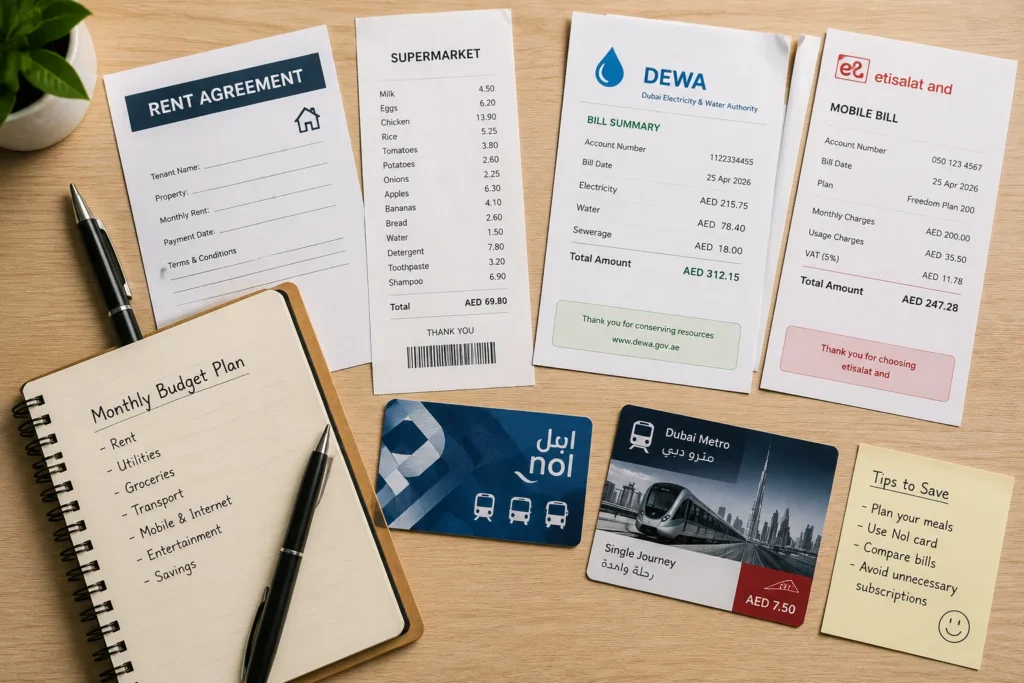
Here is a consolidated view of what a single person can realistically expect to spend per month in Dubai across three lifestyle categories:
| Expense Category | Budget Lifestyle (AED) | Comfortable Lifestyle (AED) | Premium Lifestyle (AED) |
| Accommodation | 1,500 – 2,500 | 4,000 – 7,000 | 10,000 – 20,000 |
| Food & Groceries | 700 – 1,000 | 1,200 – 1,800 | 2,500+ |
| Transportation | 300 – 450 | 500 – 900 | 1,500+ |
| Utilities & Internet | 450 – 650 | 700 – 1,100 | 1,200+ |
| Health Insurance | 0 – 200 | 150 – 400 | 400+ |
| Entertainment & Personal | 400 – 700 | 800 – 1,500 | 2,000+ |
| MONTHLY TOTAL | AED 3,350 – 5,500 | AED 7,350 – 12,700 | AED 17,600+ |
The bottom line: A single person can survive on AED 4,000–5,000/month with shared accommodation and careful budgeting. A comfortable, independent lifestyle typically requires AED 8,000–12,000/month. And if you want the full Dubai luxury experience, AED 15,000+ per month is a reasonable expectation.
8. Practical Tips to Reduce Monthly Expenses in Dubai
- Choose your accommodation area wisely — this single decision can save or cost you AED 2,000–5,000 per month.
- Use the Metro as your primary transport — it is reliable, air-conditioned, and covers major business districts.
- Cooking at home at least 4–5 days a week — meal-prepping on weekends can save AED 800–1,200 monthly.
- Compare telecom plans — Etisalat (e&) and du both offer competitive packages; switching or negotiating can save AED 100–150/month.
- Take advantage of Dubai’s free outdoor spaces — beaches, parks, and public areas are free and genuinely enjoyable.
- Use apps like Entertainer or Zomato for restaurant discounts — 2-for-1 deals are common and add up over time.
- Track your spending — even a basic spreadsheet can reveal surprising patterns in where your money actually goes.
Housing costs vary according to current Rent Prices in Dubai
Frequently Asked Questions (FAQs)
Q1: What is the minimum salary needed to live comfortably in Dubai as a single person?
Most financial advisors and expats suggest a minimum of AED 8,000–10,000 per month to live independently and comfortably — covering a studio apartment, food, transport, and basic lifestyle expenses. Salaries below AED 5,000 are manageable only with shared accommodation and very controlled spending.
Q2: Is it possible to save money while living in Dubai?
Yes, absolutely — and this is one of the reasons Dubai attracts so many expats. With no income tax, a significant portion of your salary is yours to keep. With a monthly income of AED 12,000 and moderate expenses around AED 8,000, saving AED 3,000–4,000 per month is very realistic.
Q3: How much does a single person spend on food per month in Dubai?
On average, between AED 800 and AED 1,800 per month depending on lifestyle. Home cooks who shop at Lulu or Carrefour can keep it under AED 900. Those who eat out frequently can easily spend AED 2,000 or more.
Q4: Are utility bills included in rent in Dubai?
Usually, no. Most apartments in Dubai are rented without utilities. Electricity, water, and cooling charges are billed separately through DEWA. Always clarify this with your landlord before signing a lease — some buildings do include district cooling (chiller) charges in the rent.
Q5: Which area in Dubai is cheapest for a single person to live?
International City, Al Nahda, Deira, Discovery Gardens, and Al Quoz are consistently among the most affordable residential areas in Dubai. Studio apartments in these areas can be found for AED 2,500–4,000 per month, significantly below the city average.
Q6: Is Dubai more expensive than other major cities like London or New York?
In many ways, Dubai is actually more affordable than London or New York — especially when you factor in zero income tax. Rent is comparable to London for mid-range accommodation, but without the tax burden, your take-home salary goes much further. Groceries and dining are also generally more affordable than in Western capitals.
Final Thoughts
Dubai is a city of contrasts — it can be one of the most expensive cities in the world if you let it, or a genuinely affordable place to build a good life if you approach it with a plan.
The key takeaway from this breakdown is that accommodation choice is the single most impactful financial decision you will make in Dubai. Get that right, and managing the rest of your monthly expenses becomes much more straightforward.
Whether you are earning AED 5,000 or AED 50,000, understanding exactly where your money goes is the foundation of financial stability — in Dubai or anywhere else.
If you found this guide helpful, explore our other articles on UAE salaries, visa costs, and the best areas to live in Dubai for more practical insights.