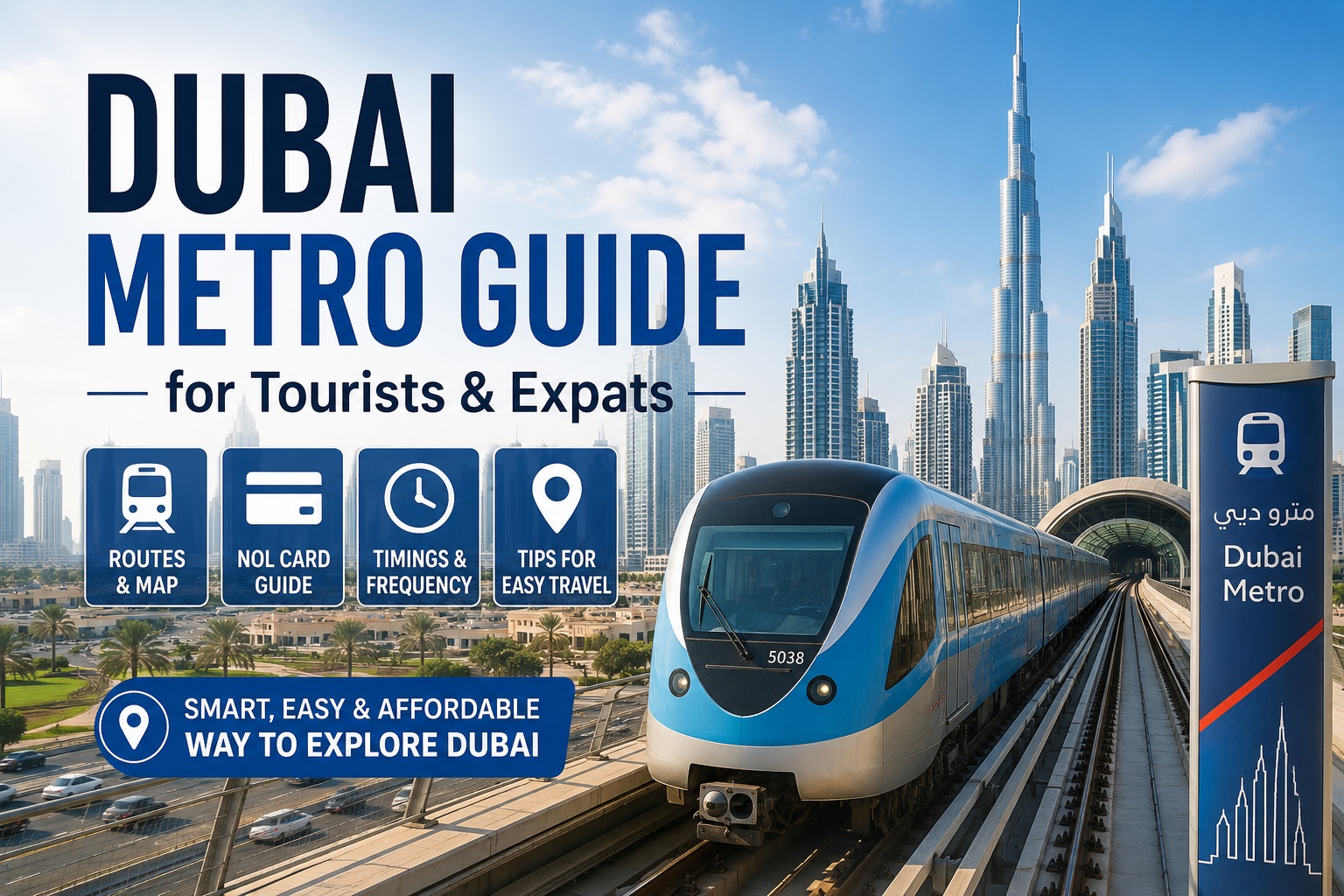
Let’s be honest when most people think of getting around Dubai, they picture taxis gliding past skyscrapers or maybe a rented car cruising down Sheikh Zayed Road. But the Dubai Metro? It’s the city’s best-kept not-so-secret. Clean, fast, air-conditioned to the point of feeling like a walk-in fridge in July, and shockingly cheap compared to what you’d pay for a cab covering the same distance.
Whether you’ve just landed for a week of sightseeing or you’re moving here for work and trying to figure out your daily commute, this guide should answer pretty much everything you need to know.
Why the Metro Actually Makes Sense in Dubai
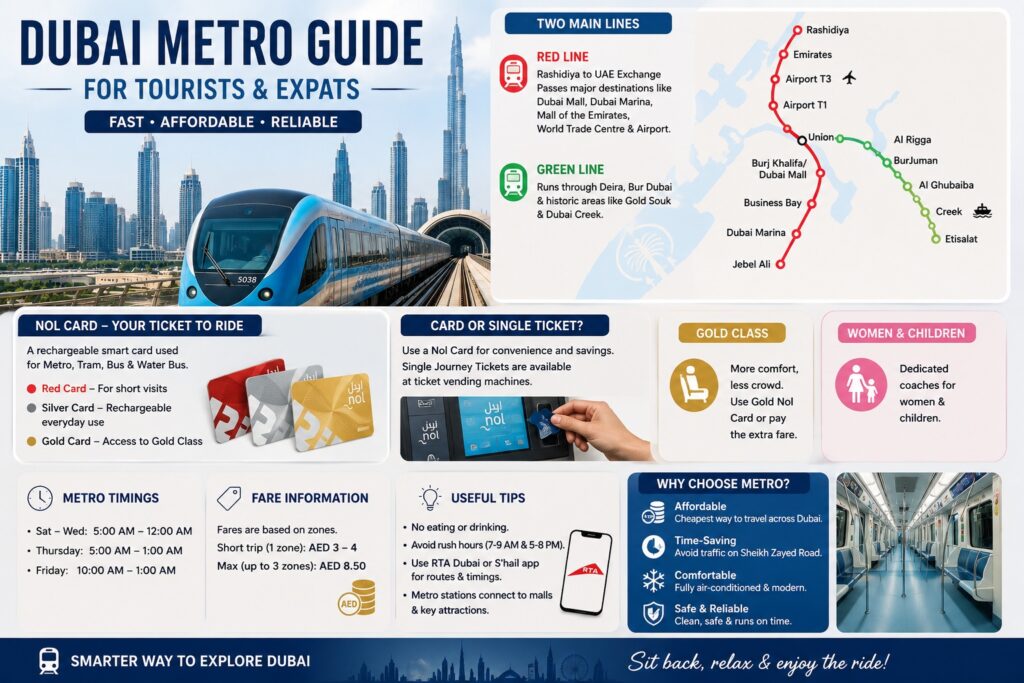
Dubai isn’t exactly a walkable city in the traditional sense; the blocks are massive, the heat is brutal for much of the year, and pedestrian infrastructure between neighborhoods can be patchy at best. That’s precisely why the metro works so well here. It cuts straight through the traffic chaos on Sheikh Zayed Road, which, if you’ve ever sat in it during rush hour, you’ll understand is worth avoiding at almost any cost.
I remember taking a cab from Downtown to Dubai Marina during evening traffic once 45 minutes, meter climbing the whole way. The metro? Same route, about 30 minutes, flat fare, and I got a window seat overlooking the skyline. No contest, really.
The Two Main Lines You Need to Know
Dubai Metro runs on two primary lines, and understanding these two is honestly 90% of what you need.
The Red Line is the big one. It stretches from Rashidiya all the way to UAE Exchange (near Jebel Ali), passing through basically every major spot tourists and residents care about Dubai Mall/Burj Khalifa, Dubai Marina, Mall of the Emirates, World Trade Centre, and the airport terminals.
The Green Line runs through the older, more traditional parts of the city Deira, Bur Dubai, and the Gold Souk area. If you’re chasing that old-Dubai charm with spice markets and creek-side abras (those little wooden boats), this is your line.
Both lines intersect at Union Station and BurJuman Station, so switching between them isn’t complicated once you’ve done it once or twice.
How to Actually Buy a Ticket
This trips up a lot of first-timers. You’ve got two main options:
Nol Card:
this is the one everyone ends up using eventually. It’s a rechargeable smart card, kind of like an Oyster card if you’ve used the London Underground. You tap in, tap out, and the fare gets deducted automatically. There are a few types:
- Red Nol Card: disposable-ish, good for short visits, available at ticket vending machines
- Silver Nol Card: rechargeable, works for metro, bus, and tram
- Gold Nol Card: same as Silver but gives access to the Gold Class cabin (more on that below)
Single Journey Tickets:
fine if you’re taking one or two trips total, but honestly, if you’re staying more than a couple of days, just get a Nol Card. It saves time and hassle at the machines.
Fares are based on zones. Moving within one zone costs less than crossing into a second or third zone. As a rough example, a short single-zone trip might cost around AED 3-4, while crossing multiple zones can go up to AED 8.5 or so. Prices do get revised occasionally, so it’s worth checking current rates on the RTA app before you travel.
Gold Class, Women & Children Section What’s the Difference?
Every metro train has a Gold Class cabin, usually at the front. It’s got leather seats, a bit more legroom, and noticeably fewer people. You’ll need a Gold Nol card or pay the premium fare to sit there — regular tickets get you a fine if the inspector catches you sitting in the wrong cabin, so don’t try to sneak in.
There’s also a dedicated Women and Children section, typically the first carriage. Men aren’t permitted there except during off-peak, non-crowded times, and honestly, most locals and expats respect this without needing reminders. It’s a nice option if you’re traveling solo as a woman or with kids and want a bit more comfort.
Metro Timings You Should Actually Remember
The metro doesn’t run 24/7, which catches tourists off guard sometimes.
- Saturday to Wednesday: roughly 5:00 AM to midnight
- Thursday: extended till around 1:00 AM
- Friday: starts later, around 10:00 AM, and runs till 1:00 AM
If you’re planning a late-night outing on a Friday and expecting to hop on the metro home at 2 AM, you’ll be disappointed. Keep a taxi app installed as backup — Careem and Uber both work fine across the city.
Practical Tips From Actually Using It
A few things I’ve picked up that aren’t always obvious from official guides:
- Eating and drinking is banned on trains and platforms. Fines are real and enforced. Finish your coffee before you tap in.
- Trains get seriously packed during rush hour (roughly 7-9 AM and 5-8 PM), especially near Downtown and Business Bay stations. If you can shift your travel slightly outside these windows, do it.
- Stations connect to malls directly in several cases — Mall of the Emirates and Dubai Mall (via a covered, air-conditioned walkway from Burj Khalifa/Dubai Mall Station) being the most useful examples. Great for beating the heat.
- Download the RTA Dubai app or use the S’hail app for live train timings, fare calculators, and route planning. It’s genuinely useful and saves guesswork.
- Airport connectivity is solid. Both Terminal 1 and Terminal 3 have their own metro stations on the Red Line, making it one of the cheapest and most reliable ways to get into the city without pre-booking a transfer.
Metro vs Taxi vs Ride-Hailing: Quick Comparison
If you’re weighing your options, here’s the honest breakdown. Metro wins on cost and predictability no surge pricing, no traffic delays, and you always know exactly what you’re paying. Taxis and ride-hailing apps win on convenience, especially with luggage, in extreme heat, or when your destination isn’t near a station. Most people who live here end up using a mix of both depending on the day, and that’s probably the smartest approach anyway.
Final Thoughts
Once you get the hang of it, the Dubai Metro genuinely becomes second nature tap in, find your line, tap out, done. It won’t get you literally everywhere in the city, but for most tourist spots and a huge chunk of daily commuting routes, it’s fast, affordable, and refreshingly stress-free compared to sitting in traffic. Grab a Nol Card on day one, keep the RTA app handy, and you’ll probably end up wondering why you were even considering taxis for every single trip.